

Key Takeaways
- Affirmations are short statements designed to shift how you think about yourself. The practice has roots in self-affirmation theory, developed by psychologist Claude Steele in 1988.
- The popular version (repeating "I am confident" in a mirror) can backfire. A 2009 study found it made people with low self-esteem feel worse.
- Values-based affirmations and bridge affirmations have stronger evidence. A 2025 meta-analysis in American Psychologist found small-to-moderate positive effects on well-being.
- Affirmations aren't magic. They're one psychological tool with documented, moderate effects, and they work best when specific, believable, and tied to your values.
What are affirmations? Depends on who you ask. The practice has a credibility problem.
Search the word online and you'll find two camps. One promises that repeating positive statements will manifest your dream life. The other dismisses the whole practice as pseudoscience.
Both are wrong.
Psychologists have studied affirmations for over 30 years, and the research tells a more interesting story than either side admits. Affirmations work, but only under specific conditions. The version most people practice (repeating "I am worthy" in a mirror) can make things worse for the people who need help most.
This guide breaks down what affirmations are, what the research says, why they backfire, and the technique that works even if you've tried them before and felt nothing.
What Are Affirmations, Really?
Affirmations are short, intentional statements designed to shift your self-perception or mindset. Simple definition. But it hides an important split that most articles ignore.
Two things get called "affirmations." They produce wildly different results.
Positive self-statements are the version you've seen on Instagram. "I am confident." "I am worthy of love." "Money flows to me effortlessly." These are claims about who you are or what you deserve.
Émile Coué popularized this approach in the 1920s with his famous line: "Every day, in every way, I am getting better and better."
Self-affirmation is a different concept entirely. Psychologist Claude Steele developed self-affirmation theory at Stanford in 1988. Rather than making claims about yourself, self-affirmation means reflecting on your core values and what matters to you personally.
This distinction matters because the evidence behind each is wildly different.
| Positive Self-Statements | Self-Affirmation (Steele) | |
|---|---|---|
| Example | "I am confident and strong" | "I value being honest, even when it's hard" |
| Focus | Who you want to be | What you already care about |
| Mechanism | Repetition to change beliefs | Values reflection to reduce defensiveness |
| Evidence | Mixed (can backfire) | Strong (30+ years of research) |
| Risk | Cognitive dissonance in low self-esteem | Minimal when grounded in real values |
Most affirmation advice blends these two together. That's why results are so inconsistent. The technique matters as much as the intention.
What Does the Research Say?
The science on affirmations tells a different story than either believers or skeptics expect. Three decades of study point to clear patterns.
The Theory: Why Values-Based Affirmation Works
Steele's self-affirmation theory proposes that we're all driven to maintain a sense of personal integrity. When that integrity feels threatened (a harsh performance review, a health scare, a social rejection), we get defensive. We dismiss information, rationalize, or shut down.
Self-affirmation interrupts that cycle. Reflecting on a value you hold dear (kindness, creativity, family, honesty) reminds you that your identity is bigger than the current threat. You become more open to uncomfortable information, not less.
This isn't speculation. Researchers have tested it in over 500 published studies across education, health behavior, and psychological well-being.
The Brain Evidence
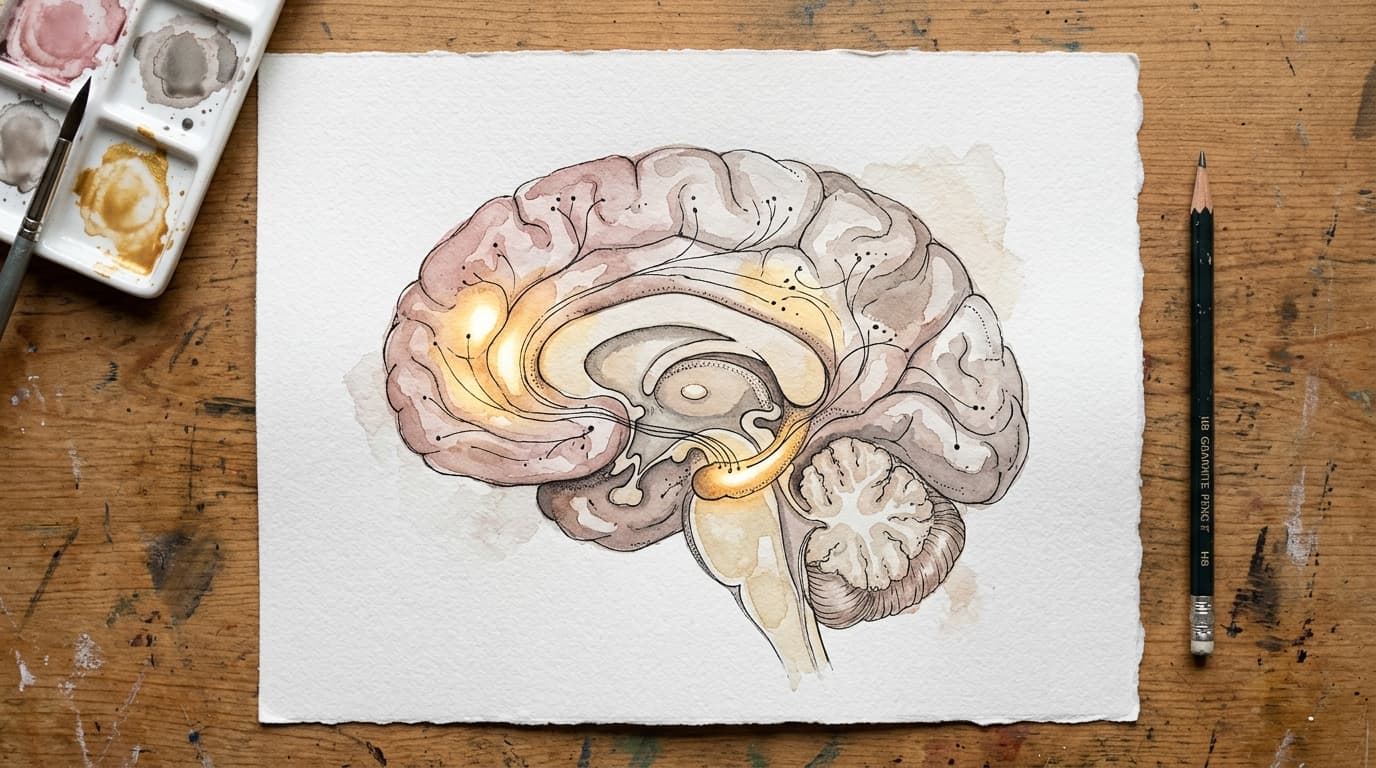
In 2016, Cascio and colleagues published an fMRI study in Social Cognitive and Affective Neuroscience that captured what happens in the brain during self-affirmation. When participants reflected on their core values, activity increased in the ventromedial prefrontal cortex and the ventral striatum: the same regions involved in self-related processing and reward.
Values-based affirmation activates the parts of your brain tied to positive future thinking. It changes neural activity in measurable ways, not just how you feel in the moment.
The Numbers: A 2025 Meta-Analysis
The most recent large-scale review came in October 2025. Zhang and colleagues published a meta-analysis in American Psychologist (the APA's flagship journal), synthesizing studies across multiple well-being measures. They found small-to-moderate positive effects, with effect sizes ranging from d = 0.14 to 0.48.
In plain language: affirmations produce real, measurable improvements in well-being. Not dramatic transformations. Steady, modest gains. The strongest effects showed up in health behavior change and reduced defensiveness.
That's an honest result. Affirmations aren't a miracle cure. They're a psychological tool with documented, moderate effects, and that's worth knowing before you start.
Why Affirmations Backfire (And Who They Hurt Most)
Here's the part most affirmation guides skip.
In 2009, psychologists Joanne Wood, Elaine Perunovic, and John Lee at the University of Waterloo ran a study that should have changed how everyone teaches affirmations. They asked participants to repeat "I am a lovable person" and measured the effect on mood and self-regard.
People with high self-esteem felt slightly better. People with low self-esteem felt worse.
The mechanism is cognitive dissonance. When you say something your brain doesn't believe, it generates a counter-argument. "I am confident" triggers an automatic internal response: "No, you're not."
The bigger the gap between the statement and your current belief, the stronger the pushback.
This creates a painful paradox. The people most likely to search for affirmations (those struggling with self-doubt, anxiety, or low self-worth) are the same people most likely to be harmed by the popular approach. During an acute episode, use short, factual affirmations for panic attacks rather than broad positive claims.
The method is flawed, not the person.
When to seek professional support: If you're in a mental health crisis, experiencing severe depression, or having thoughts of self-harm, affirmations aren't the right tool. Contact a mental health professional or call the 988 Suicide & Crisis Lifeline. Affirmations can support well-being, but they don't replace professional care.
Three Types of Affirmations (and Which One Works)
Not all affirmations are the same. Understanding the differences changes whether the practice helps or hurts.
Type 1: Positive Self-Statements
"I am wealthy." "I am beautiful." "I attract success."
Aspirational claims about who you are. They work for some people, particularly those who already have moderate-to-high self-esteem. For everyone else, they risk triggering the backfire effect.
Evidence: weak and inconsistent.
Type 2: Values-Based Self-Affirmation
"I care deeply about being a good friend, and I showed that when I checked in on Sarah last week."
These connect to your existing values and anchor them in real experiences from your life. They don't ask you to believe something new. They remind you of something you already know is true.
Evidence: strong. Thirty-plus years of peer-reviewed support across hundreds of studies.
Type 3: Bridge Affirmations
"I'm learning to trust my own judgment." "I'm open to the possibility that I deserve rest."
Bridge affirmations sit between where you are and where you want to be. They use language your brain can't argue with: "I'm learning," "I'm open to," "I'm working on."
You're not claiming to be something you don't believe. You're stating a direction.
Evidence: grounded in both self-affirmation theory and cognitive behavioral principles. Strong research supports the underlying mechanisms, though this specific technique has less standalone evidence than pure values affirmation.
| Type | Example | Best For | Backfire Risk |
|---|---|---|---|
| Positive self-statements | "I am confident" | People with existing moderate self-esteem | High |
| Values-based | "I value persistence, and I showed it today" | Anyone, especially under stress or threat | Low |
| Bridge | "I'm learning to trust myself" | People with low self-esteem or affirmation skeptics | Low |
If you've tried affirmations before and they felt hollow, you were likely using Type 1. Try Type 2 or 3 instead. For a step-by-step walkthrough on crafting bridge affirmations, read our guide on how to write affirmations your brain believes.

How to Practice Affirmations That Work
Theory is useful. Practice is what changes things. Here's a framework grounded in what the research supports.
Start With Your Values, Not Your Insecurities
Most people begin with the thing they dislike about themselves and try to flip it. "I'm not confident" becomes "I am confident." That's the backfire setup.
Instead, ask: what do I care about? Kindness? Creativity? Being a good parent? Start there.
"I showed patience with my kid this morning, even when I was running on no sleep." That's an affirmation your brain accepts because it happened. (If you're a new parent navigating this kind of self-talk daily, our affirmations for new moms are built around exactly this.)
Use Bridge Language When Present Tense Feels False
If "I am enough" makes you cringe, you're not broken. You're honest. Use bridge phrasing:
- "I'm learning to believe I'm enough."
- "Part of me knows I deserve this."
- "I've handled hard things before, even imperfectly."
- "I'm open to the idea that things can get better."
Keep It Specific
"I am strong" is forgettable. "I got through that conversation with my boss yesterday without shutting down" is real. Specific affirmations stick because your brain recognizes the evidence.
Pick a Practice Method
Research supports several approaches:
- Writing by hand engages motor and cognitive pathways that thinking alone doesn't reach
- Speaking aloud adds auditory reinforcement (your brain processes your own voice differently than internal dialogue)
- Listening to recorded affirmations works for passive practice, particularly before sleep
No single method is "best." Pick what fits your life and what you'll do consistently.
Consistency Over Intensity
Five minutes daily produces better results than a 30-minute session once a week. You're building a thought pattern, not completing a task.

Building an affirmation practice takes time. Affina creates personalized bridge affirmations based on what you're going through, in seconds.
Try Affina freeWhat Affirmations Can't Do
Honesty builds trust. So here's what affirmations won't fix.
Affirmations won't resolve a toxic job, an abusive relationship, or a chemical imbalance. Therapy and medication do what they do. And no amount of positive self-talk overrides problems that need action, not mindset shifts.
The "repeat it until you believe it" framing is also wrong. If repetition alone rewired beliefs, advertising would work on everyone.
What affirmations can do: reduce defensiveness, support healthier self-talk, and help you stay open to change when your instinct is to shut down. That's not nothing. But it's not everything.
Think of them like stretching. It won't make you an athlete. But it keeps you flexible enough to show up and move.
The Bottom Line
So what are affirmations, stripped of the hype? A studied psychological practice with real effects and specific conditions that determine whether they help or hurt.
The version that works is grounded in your values, honest about where you are, and specific to your life. The version that backfires makes grand claims your brain rejects.
The field is still evolving. That 2025 meta-analysis is one of dozens of studies published in the last two years. Researchers are still mapping which techniques work best, for whom, and under what conditions.
What's already clear: the practice deserves better than Instagram platitudes or blanket dismissal. And if you've written off affirmations because they felt fake, you weren't wrong about what you tried. You just hadn't found the version built to work.
Affina builds personalized affirmations around your values and what you're going through right now. No generic lists.
Try Affina free