

Three AM. The baby finally stopped crying. You should be sleeping, but you're scrolling your phone instead, reading articles with titles like this one, wondering if searching for reassurance means you're already failing.
You're not.
These 40 affirmations for new moms are sorted by what you might be going through right now. Not generic positivity. Not "you've got this, mama" platitudes. Words that meet you where you actually are, including the places you haven't told anyone about.
When Everything Changed Overnight
Nobody talks enough about the identity fracture that happens when you become a mom. One day you're a person with a name, a career, hobbies, a full internal life. The next, your world reorganizes around someone else's needs.
Research from the Policy Center for Maternal Mental Health shows that maternal mental health disorders are the leading complication of childbirth, affecting 1 in 5 women in the U.S. The identity shift is part of what makes early motherhood so destabilizing, even when everything is technically "going well."
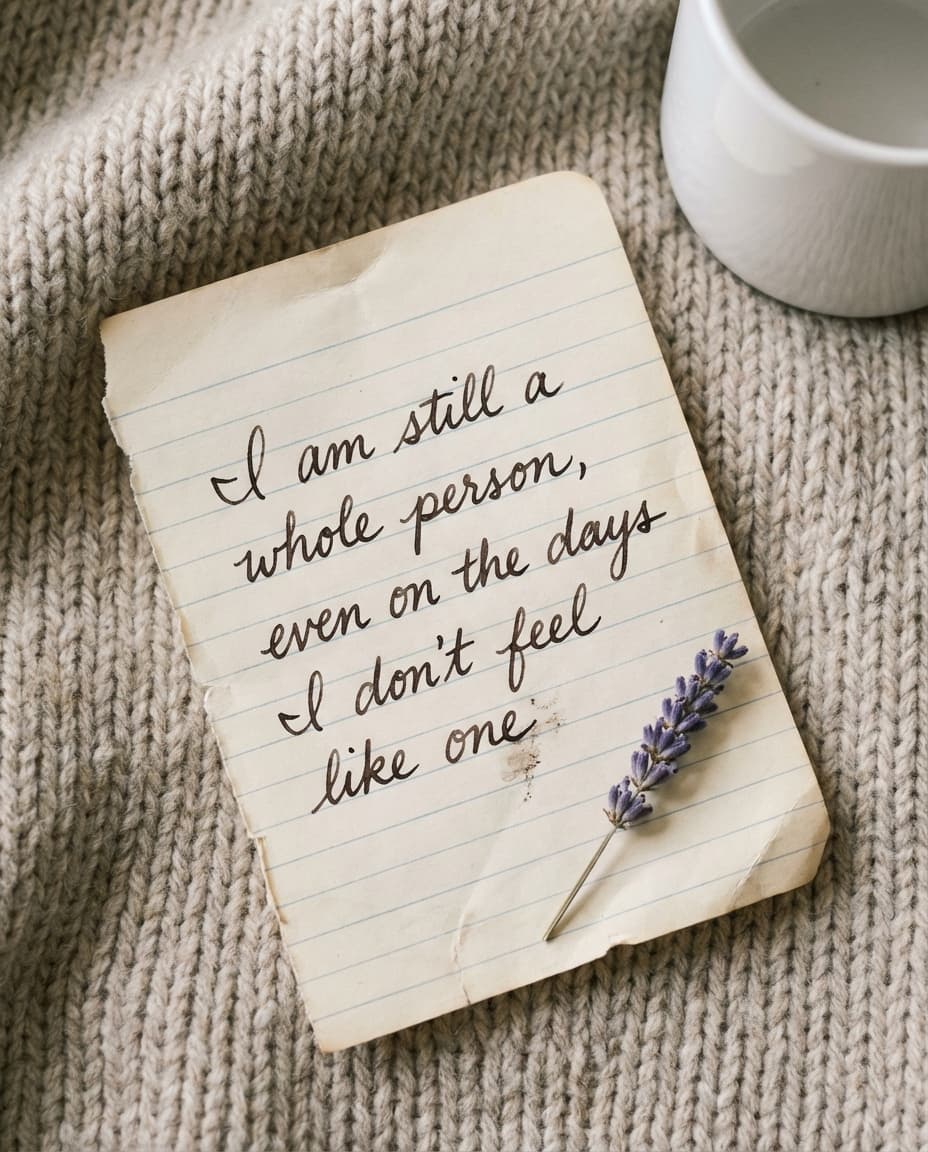
1. I am still a whole person, even on the days I don't feel like one.
Motherhood added to who you are. It didn't erase the rest.
2. This is the steepest part of the learning curve. It gets less vertical.
The first weeks are the hardest because everything is new at once. Feeding, sleeping, recovering, bonding. None of those things get harder from here.
3. I don't have to love every moment to love being a mom.
Hating the 2 AM feeding doesn't mean you hate motherhood. It means you hate being awake at 2 AM. Those are different things.
4. My life before the baby was real and good. My life now is real and good. Both count.
Grieving parts of your old life is not the same as regretting your new one. If grief is the feeling sitting heaviest right now, our affirmations for grief go deeper into that territory.
5. Feeling overwhelmed is not a character flaw. It's a normal response to an enormous change.
Your nervous system is recalibrating while your hormones shift and your sleep falls apart.
6. I don't have to have it figured out today.
No one does. The mom at the park who looks composed? She doesn't have it figured out either. The one posting magazine-quality nursery photos? Same.
7. I can hold this baby and still hold onto myself.
Your identity as a mother doesn't have to consume every other identity you carry.
8. The fact that I'm worried about doing this well means I care. That's the foundation.
Bad parents rarely lose sleep over whether they're bad parents. Your concern is evidence of something good, not a warning sign.
When You're Convinced You're Getting It Wrong
Mom guilt starts early. Sometimes before you leave the hospital. You're already comparing yourself to a standard that doesn't exist: the version of motherhood you imagined, the version other moms perform online, the version your own mother remembers (selectively).
A 2021 randomized controlled trial by Lennard, Mitchell, and Whittingham at the University of Queensland found that a brief online self-compassion intervention improved depression, PTSD symptoms, and self-compassionate action in mothers of infants. Self-compassion, in research terms, means talking to yourself the way you'd talk to a friend going through the same thing.
9. I am allowed to learn this as I go.
No manual covers your specific baby, your specific body, your specific life. Figuring it out in real time is the only option. It's also a valid one.
10. Comparing my worst moment to someone else's highlight reel is a rigged game.
You see their curated best. They don't see you crying in the bathroom. The comparison was never fair.
11. My baby doesn't need a perfect mom. They need a present one.
Donald Winnicott coined the term "good enough mother" in the 1950s. His research showed that children thrive with caregivers who show up, respond, and repair when things go wrong, not ones who never make mistakes.
12. Making a mistake doesn't make me a bad mother. It makes me a human learning a new role.
You'd give a new coworker grace during their first weeks. Give yourself at least that much.
13. I can ask for help without it meaning I can't handle this.
Asking for help is handling it. The mothers who struggle most are often the ones suffering in silence.
14. My way of doing this is as valid as anyone else's.
Breast or bottle. Co-sleeping or crib. Baby-wearing or stroller. The right way is the way that works for your family.
15. The loudest critic in my head is not the most accurate one.
That voice runs on sleep deprivation, hormonal chaos, and unrealistic expectations. Its opinions are not facts.
16. I can be a great mom and still have bad days.
Bad days are data points, not verdicts. If you're carrying guilt about a specific choice or moment, our affirmations for forgiveness address self-forgiveness directly.

When Your Body Doesn't Feel Like Yours
Your body grew a human, then delivered that human into the world. Now, instead of rest, you're expected to produce milk, function on fractured sleep, and somehow look like none of it happened.
The "bounce back" pressure is a lie that benefits no one.
17. My body did something remarkable. I don't owe it punishment for how it looks afterward.
Recovery is not a makeover project.
18. The timeline for my body to feel like mine again is nobody's business but mine.
Your partner doesn't get a vote. Neither does your mother. Neither does Instagram.
19. Stretch marks, scars, and softness are not failures. They're evidence.
Evidence that you built a person from scratch.
20. I can want to feel strong again without hating where I am now.
Wanting change and accepting the present aren't opposites. You can hold both without contradiction.
21. My body is still working for me, even on the days I can't see it.
Healing stitches. Regulating hormones. Producing food for another human. It hasn't stopped.
22. I will not compare my postpartum body to my pre-baby body. They had different jobs.
One was yours alone. The other built a family. Judging one by the other's standards makes no sense.
23. Feeding my baby, however I do it, is enough.
Breast, bottle, combo. Fed and loved. That's the whole list.
The first weeks of motherhood come with a new inner voice, one that's mostly critical. Affina helps you train a kinder one.
Try Affina freeWhen Nobody Sees How Hard This Is
Motherhood can be isolating in a way that's hard to explain to anyone who hasn't lived it. You're never alone (the baby is always there), but you can feel profoundly lonely. The conversations are mostly one-sided. The work is invisible.
A 2022 meta-analysis in BMC Pregnancy and Childbirth confirmed what most new moms already sense: low social support is one of the strongest risk factors for postpartum depression. The cruelest part is that the people who need support most often have the least capacity to ask for it.
24. My exhaustion is not a competition. It doesn't need to be "worse" to be real.
You don't have to qualify your tiredness by comparing it to someone else's. Tired is tired. If the exhaustion has hardened into detachment or a loss of confidence in yourself, parental burnout is a recognized phenomenon, and our affirmations for burnout speak to that specific territory.
25. The work I'm doing matters, even when no one acknowledges it.
Feeding, soothing, changing, holding, rocking, cleaning, feeding again. Repetitive and relentless. Also building a human's entire foundation.
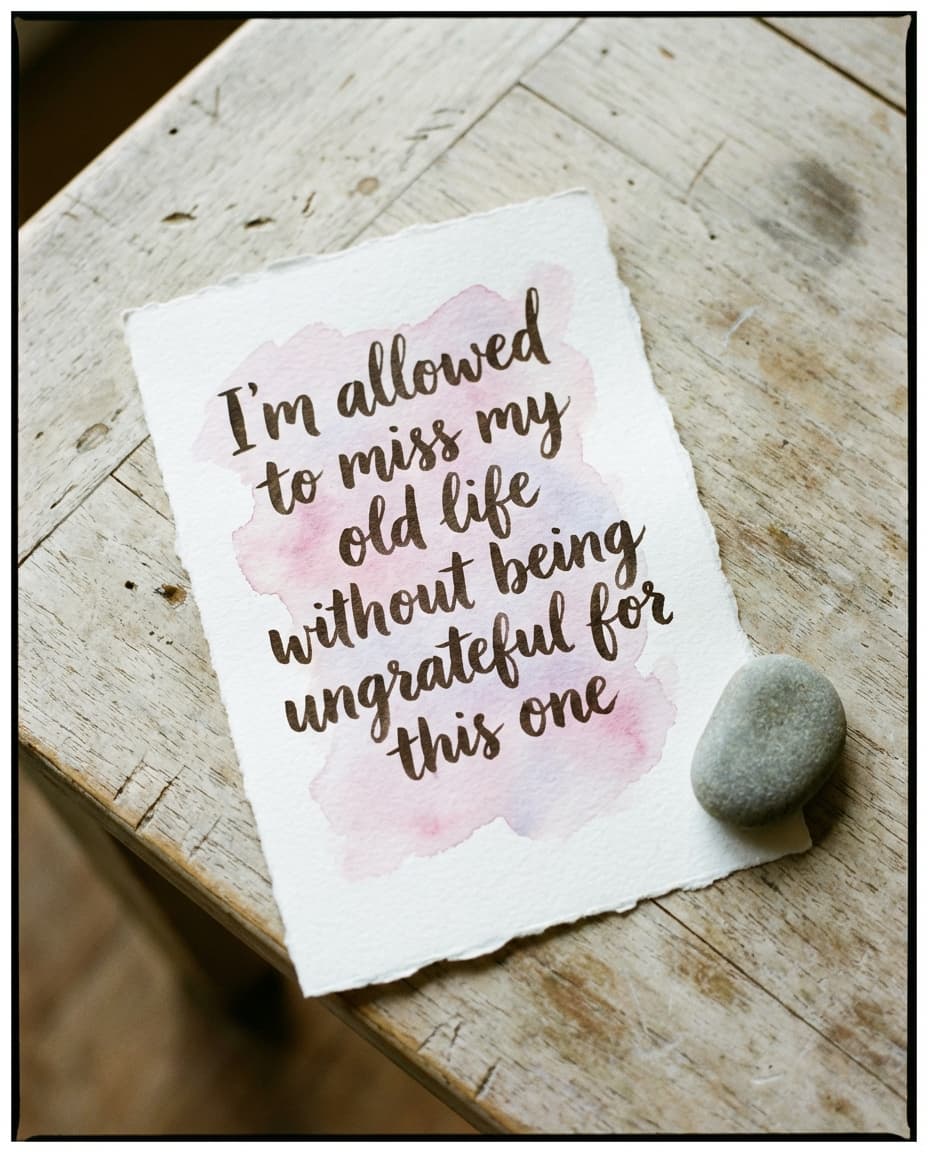
26. I'm allowed to miss my old life without being ungrateful for this one.
You can love your baby and miss sleeping past 6 AM. You can love being a mom and miss spontaneous dinner plans. Both things fit.
27. Needing time alone doesn't mean I don't love my baby.
Your need for solitude isn't a rejection of your child. It's how you refill the well they drink from.
28. The resentment I feel toward my partner right now doesn't mean our relationship is broken.
Sleep deprivation and uneven labor distribution create friction that feels personal but is structural. Name it, talk about it, and don't mistake a hard season for a failing marriage. (If your relationship needs more than a single affirmation right now, our affirmations for marriage cover every season a partnership goes through.)
29. A group chat is not the same as someone sitting next to me on the couch.
Digital support has limits. Sometimes you need a person in your house, holding the baby while you take a shower. Asking for that specific thing is allowed.
30. Saying "I need help" doesn't mean I love my baby less.
It means you love your baby enough to make sure their parent isn't running on empty.
31. Invisible work is still work.
Tracking feeding schedules, remembering the pediatrician appointment, noticing the rash, knowing which cry means what. None of it shows up on a to-do list. All of it counts.
When Complicated Feelings Show Up
Something most new mom content won't say: motherhood brings grief alongside the joy. You grieve your old body, your old relationship, your old freedom, your old sense of self. That grief sits right next to the love, and nobody prepares you for how confusing it feels to hold both.
Postpartum depression and anxiety affect roughly 1 in 5 new mothers, and rates in the U.S. nearly doubled between 2010 and 2021. Less than 15% of women with postpartum depression receive treatment. If your feelings seem bigger than "baby blues," they might be. That's not weakness. It's biology and circumstance colliding.
32. I can love my baby and still feel sad. Both are real.
You might cry while nursing, feel hollow while watching your baby sleep, wonder why the moments that are supposed to be beautiful sometimes aren't. This isn't a contradiction. It's what "both are real" actually looks like.
33. These feelings are temporary, even when they don't feel temporary.
The fog lifts. Not on a schedule. But it lifts.
34. Crying doesn't mean I'm falling apart. Sometimes it means I'm processing what I can't put into words.
Tears are a stress valve, not a breakdown signal.
35. I am not what my worst thoughts say about me at 3 AM.
Sleep-deprived brains produce sleep-deprived thoughts. They are not reliable narrators.
36. It's okay to not feel bonded yet. Attachment builds over time.
Some mothers don't feel an immediate rush of love in the delivery room; they feel exhaustion, confusion, or nothing at all. A 2018 review in Archives of Women's Mental Health found that delayed bonding is common and that early difficulties don't predict long-term attachment. The bond builds through feeding, holding, and showing up, over weeks and months.
37. I can admit this is harder than I expected without it meaning I made the wrong choice.
Underestimating how hard something will be and making a bad decision are not the same thing.
38. What I'm going through has a name. It's common. And it's treatable.
If the feelings are persistent, heavy, and getting in the way of daily life, talk to your doctor. Postpartum depression and anxiety are medical conditions with high recovery rates. (If this resonates, the resources section below has specific places to call.)
39. I deserve the same compassion I'd give any other new mom going through this.
You'd never tell a friend she was failing. Start talking to yourself with that same voice.
40. Every day I show up for this baby, I'm proving I'm enough.
You're here. You're reading this because you care. That's not a small thing.
How to Actually Use These

You're feeding the baby at 2 AM anyway. Open your phone. Read one affirmation. That's the whole routine.
No journaling. No mirror work. No 20-minute morning ritual that requires you to wake up before the baby, which is a joke. Pick the one affirmation that made your chest tighten or your eyes sting. Screenshot it. Set it as your lock screen.
If "I am a great mother" feels like a lie right now, it probably is (for your brain, at least). Scale it back with bridge language: "I'm learning to trust myself as a mom." Your brain can't argue with "I'm learning" because it's already true the moment you say it.
When one stops resonating, swap it. That's not failure. That's your needs shifting, which they will, sometimes weekly.
For the science behind why this works (and why generic affirmations can backfire), we've written a full breakdown.
Postpartum Mental Health Resources
Affirmations are one tool. For some of what new motherhood brings, they're not enough alone.
If you're experiencing persistent sadness, anxiety that won't quiet down, intrusive thoughts about harming yourself or your baby, or a disconnection that goes beyond normal exhaustion, talk to your doctor or a mental health professional. These are medical conditions with high recovery rates when treated.
- Postpartum Support International: Call or text 1-800-944-4773 (English/Spanish)
- 988 Suicide and Crisis Lifeline: Call or text 988
- Crisis Text Line: Text HOME to 741741
- Psychology Today therapist finder: psychologytoday.com/us/therapists (filter for "postpartum" or "perinatal")
Less than 15% of women with postpartum depression receive treatment. If that statistic makes you angry, good. It should.
It's still the middle of the night. Your baby is asleep again. You're still on your phone. But maybe one sentence from this list landed somewhere it needed to. Hold onto that one. The rest can wait until tomorrow.
You're already doing the hardest job on the planet. Affina gives you words for the moments when yours run out.
Try Affina free